Workplace security is something every business owner should take seriously. It doesn’t matter whether you run a small retail shop, a dentist’s office, or a large company with hundreds of employees. Keeping your space secure protects your staff, equipment, important documents, and your entire business. Many businesses invest in cameras and alarm systems, but they often overlook the locks on their doors.
That’s where a commercial locksmith comes in. These are trained professionals who focus on business and commercial security. They understand which locks, access systems, and hardware work best in a professional setting. Their job goes well beyond cutting a spare key. It’s about making sure your building is properly protected at every entry point.
What a Commercial Locksmith Does for Businesses?
Many people call a locksmith only in an emergency, usually when they’re locked out. But commercial locksmiths offer a much wider range of services for businesses on a regular basis. They work with business owners and facility managers to keep the building secure, properly set up, and up to date with the property’s security needs. Here’s what they commonly handle:
- Installing commercial-grade locks on entry doors, back doors, storage areas, and restricted rooms.
- Setting up master key systems so staff members can access only the areas they need.
- Installing electronic access systems, including card readers, key fobs, and PIN-code entry pads.
- Rekeying locks when an employee leaves, especially after a sudden or difficult departure.
- Repairing or replacing old, worn-out, or broken locks before they become a serious problem.
- Providing 24/7 emergency lockout help so businesses don’t lose valuable working hours.
- Running security assessments to find and fix weak spots across a building’s entry points.
Each of these services plays an important role in keeping a business secure day to day.
Why Home Locks Don’t Work for Commercial Spaces?
One big mistake business owners make is using standard residential locks on commercial doors. These locks may look fine, but they’re not built to handle the stress of heavy daily use. In a busy office building, a single door might be opened and closed hundreds of times a day. Regular home locks wear out much faster under that kind of pressure.
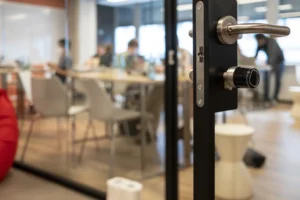
Commercial locks are made from stronger materials and are built to last in high-traffic environments. Many of them also come with features specifically meant to prevent break-ins, such as:
- Anti-pick pins that resist even professional picking tools.
- Anti-drill plates built right into the lock cylinder.
- Reinforced deadbolts that are far harder to force open.
- Heavy-duty strike plates that keep the door frame strong.
Using the wrong type of lock in a commercial space poses a real safety risk. A locksmith can walk through the building, review the current lock setup, and recommend the right hardware based on the building type.
Also Read: How Can a Residential Locksmith Upgrade Your Home Security System?
Access Control Systems Change How Businesses Handle Security
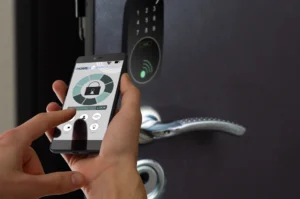
One of the best upgrades is an access control system. Instead of handing out physical keys, employees use cards, key fobs, PINs, or biometric methods such as fingerprints to enter the building or move between rooms.
This type of system gives a business much more control over who goes where and when. Here’s what makes it so useful:
- You can set specific access rules for different employees or entire departments.
- Every entry is logged digitally, so you can check who came in and exactly when.
- If someone loses their card or badge, you simply disable it. No need to change any locks
- Doors can be managed remotely from a phone or computer.
- There are no physical keys to lose, copy, or pass around without permission.
Access control is well-suited for offices with sensitive areas, such as server rooms, cash-handling areas, or storage rooms containing expensive inventory.
Also Read: Best High-Security Locks for Offices & Businesses
Master Key Systems: Practical and Secure
A master key system is one of the most practical security setups for a medium or large-sized business. Different employees receive keys that open only certain areas, while a master key opens everything.
A front desk worker might have access only to the lobby and the break room. A department supervisor might have access to the supply room and meeting rooms. The owner or facilities manager holds the master key that opens every door. This keeps sensitive areas restricted and reduces the risk of internal theft or unauthorized access.
What’s great about this system is that it doesn’t slow down the workday for staff. Everyone gets access to exactly what they need, nothing more.
Also Read: Why Every Washington DC Business Needs a Master Key System?
Rekeying After an Employee Leaves
This is one of the most overlooked steps in workplace security. When an employee leaves a company, especially if they leave on bad terms, they walk out with a working key to your building. That is a serious vulnerability that many business owners don’t address immediately.
A commercial locksmith can rekey locks quickly and at a reasonable cost. Rekeying changes the lock’s internal pins so the old key no longer works, while the lock hardware remains in place. It’s faster and cheaper than a full lock replacement and addresses a real security gap before something goes wrong.
Businesses that experience high staff turnover should consider scheduling rekeying regularly, even every three to six months, to stay ahead of potential risks.
Panic Hardware and Emergency Exit Security
Commercial buildings are required by law to have proper emergency exits. Panic bars are the standard setup; they’re the horizontal bars on exit doors that push open easily from the inside during an emergency. But if they’re not properly secured from the outside, they can become an easy entry point for someone trying to get in without permission.
A commercial locksmith can install and maintain panic hardware that meets fire codes and local building regulations while keeping the building’s exterior secure. This is a common area that often gets overlooked in routine security checks, and it’s worth giving it proper attention.
Regular Security Assessments: Know Where Your Building Stands
Sometimes a business owner knows they have a problem but cannot see it clearly. A locksmith can walk through the building and point out weak spots. Maybe a back door is hidden by bushes, giving a burglar a place to work unseen, or maybe the windows are never locked after closing time.
After the walk-through, the locksmith offers simple, honest advice. They do not push you to buy anything you do not need. Their goal is to help you close the gaps in your security. This kind of inspection is inexpensive compared to the cost of a break-in.
Payless Locksmith DC Keeps Washington Businesses Safe
Payless Locksmith DC has worked with businesses across Washington, DC, for years, helping them implement the right security setup. Our team of licensed and insured locksmiths has hands-on experience with all types of commercial lock systems, access control installations, master key systems, and emergency lockouts.
Our team is available 24 hours a day, so help is available whenever it’s needed, not just during regular business hours. We assess each property individually and recommend security upgrades based on its specific needs. If your workplace is due for a security check, a lock upgrade, or a complete access control installation, we’re ready to get it done right.